
Agent Sprawl Has a Token Bill: Make Sure You Are Not Paying Twice
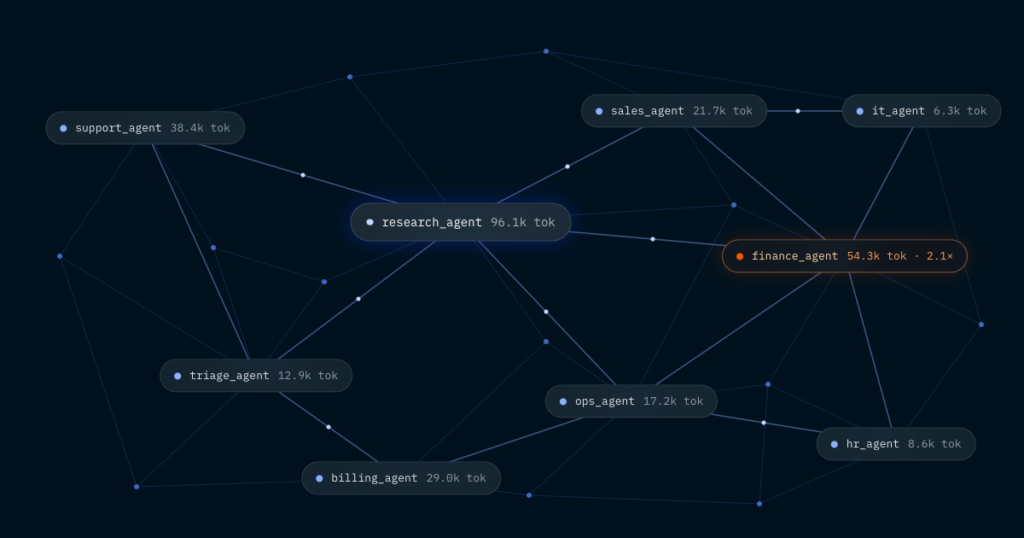
Every team has an agent roadmap, and it keeps getting longer. Agent sprawl is real: there’s the support agent, the triage agent, the research agent, and the one sales asked for last Tuesday. Each ships with a prompt, a few tools, and a meter that starts running on the first call.
The pressure to ship is real. Gartner projects that 40% of enterprise applications will include task-specific AI agents by the end of 2026, up from less than 5% in 2025.
Each of those agents also costs more to run than the chatbot it replaced.
And cost is already killing projects. Gartner expects more than 40% of agentic AI projects to be canceled by the end of 2027, citing escalating costs, unclear business value, and inadequate risk controls.
You pay for the tokens. Then you pay to find out why.
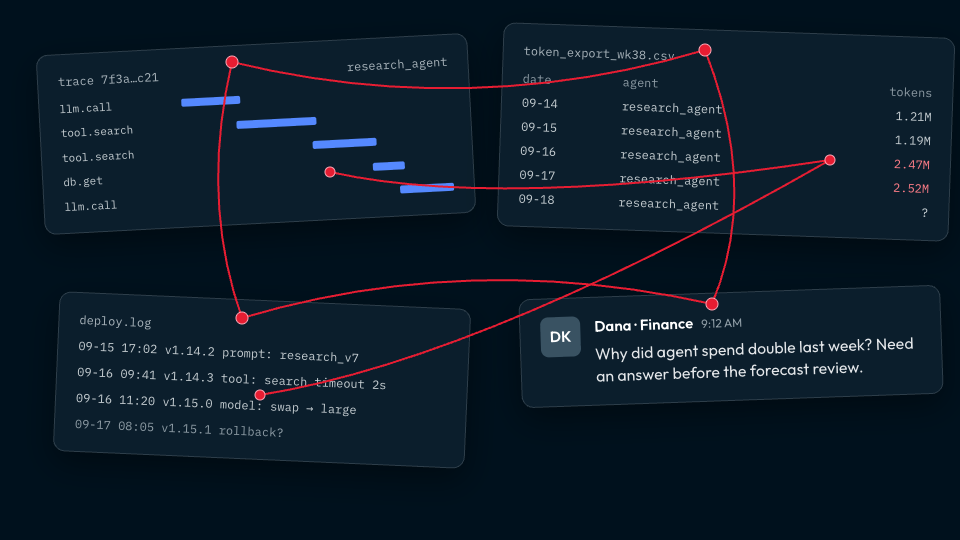
Most teams learn what an agent costs when the invoice lands. Then the engineer who shipped it gets the Slack message: why did spend double last week?
What follows is forensics. Pull traces. Export token counts into a spreadsheet. Line up deploys against the spike and guess which prompt change, tool, or model swap made things worse. It eats days, and the answer is often a shrug.
That’s the second bill. You paid for the wasted tokens, and now you’re paying again in engineering hours to explain them.
The expensive runs are the ones that passed
Failed runs get attention. They throw errors, page someone, and turn a dashboard red. The waste that adds up hides in runs that succeeded.
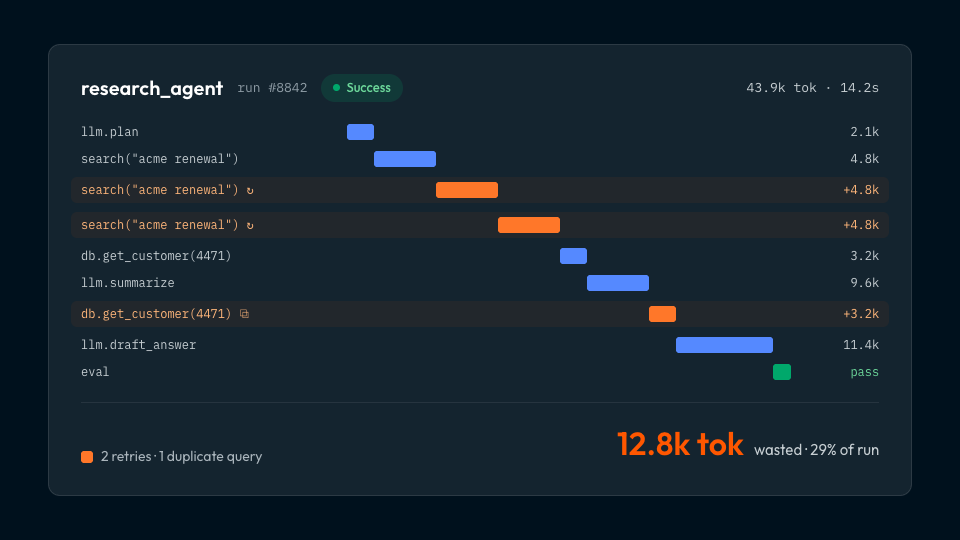
Picture a research agent that answers correctly every time. Evals pass. Users are happy. But on some runs, a flaky tool response sends it into a retry loop, and it calls the same search three times before moving on. Another agent fetches the same customer record twice per run because two steps don’t share context. Nothing breaks. Nothing alerts. You just pay for it, run after run.
Now multiply that across every agent on this year’s roadmap. Gartner’s sales analysts already warn about agent sprawl: more agents and more digital activity, without more real impact. The same holds for spend. More agents means more silent waste, until finance asks about the line item.
Spend less per run without losing reliability
Monte Carlo shows you what each agent costs, how it performs, and where it wastes money, all in one place.
See why an expensive run was expensive. Monte Carlo attributes cost by step, tool call, and the other dimensions your team tracks. When spend spikes, you see which step drove it instead of reconstructing the story from traces.
Tell a slow agent from a wrong one. Latency, failures, and output quality sit on the same view as cost. So you can cut spend without trading away the reliability your users notice, and when an agent slips, you know whether to fix speed or answers.
Catch waste no dashboard flags. Reinforcement Loop reads every production run and flags silent inefficiencies like retry loops and duplicate queries. You fix spend on runs that technically succeeded, the ones nobody was looking at.
See it in action
In our demo webinar, we go inside the Monte Carlo platform and show how teams cut cost per run while keeping agents reliable.


