Working smarter with Claude: a practitioner’s guide to token efficiency and output quality

At Monte Carlo, we run a lot of our workflows and processes on AI. Claude is woven into our product, our internal tooling, our agents, and our day-to-day tasks. So when I say teams are routinely wasting 30-40% of their token budget, I’m not guessing. This is something I’ve watched happen at scale, including inside our own infrastructure.
And, while LLM inference is getting cheaper all the time, token waste is still an issue – beyond simply the cost of it. It’s a signal that your AI system or ways of working are not well designed.
Most practitioners have seen the common issues: long, bloated prompts, redundant context, or models doing triage work that a $0.25/million-token model could handle.
These are architectural problems more than just billing ones. Eventually, they will degrade output quality, slow iteration cycles, and become increasingly expensive as you move from experiments to production.
As we iterate and improve our own processes at Monte Carlo, I’ve put together some things I’ve learned about using Claude effectively.
Token efficiency and output quality are connected
Most people think about token efficiency as purely a cost-cutting exercise rather than a quality exercise. I would argue that quality is a major factor in this, as well.
Consider the actual mechanic of a complex request: Claude re-reads the entire conversation on every message, and every tool that’s enabled adds to that context, whether it’s being used or not. Every redundant paragraph you paste in gets re-processed on every turn.
The cost of this would compound quadratically, not linearly. A 20-message conversation averaging 1,500 tokens per exchange doesn’t cost 30,000 tokens, it costs closer to 315,000.
However, long, bloated context doesn’t just cost more. It produces worse answers. The model’s attention gets diluted across everything it has seen. Early instructions fade, constraints drift, and the model starts hedging and covering more ground because it can’t tell what actually matters.
As you can see, token efficiency and output quality are connected.
For developers: implementation tips that move the needle
There are a number of ways to reduce token consumption, improve output quality, and generally improve the efficiency of your Claude usage.
If you’re building on the Claude API or integrating Claude into agents and workflows, these are the changes with the highest ROI.
1. Stop defaulting to your most expensive model
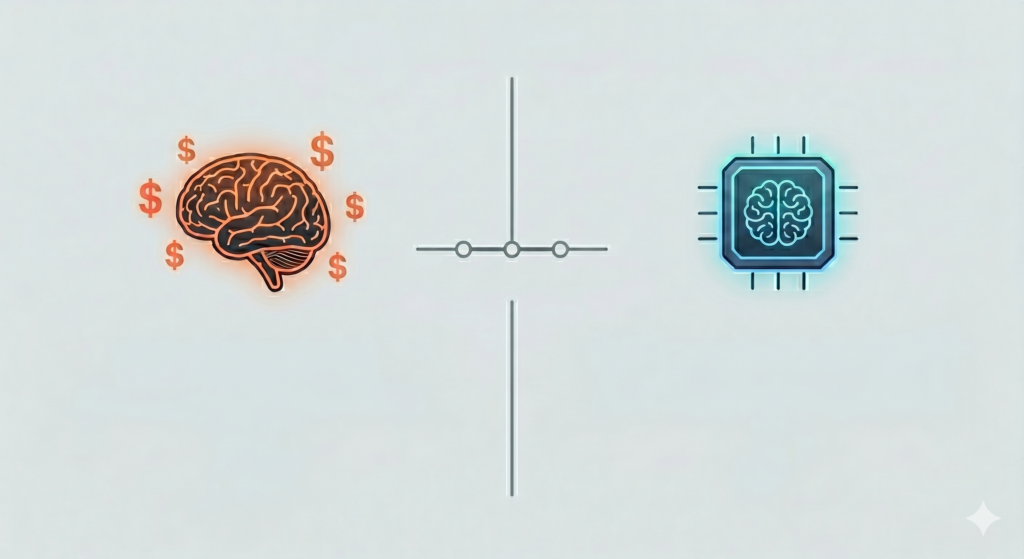
Opus is not a better Sonnet. It’s a different tool, one optimized for tasks where multi-layered reasoning genuinely changes the answer. For 80-90% of API workloads — extraction, classification, summarization, short-form generation — Sonnet or Haiku will match Opus quality at a fraction of the cost.
The single highest-impact change most engineering teams can make is to set the org default to Sonnet. This is because users will not downgrade on their own, even when the task doesn’t need Opus. Changing this one setting can reduce API spend by 40% or more.
Here is the framework I use:
| Model | When to Use It | When Not To |
|---|---|---|
| Haiku | Fast, mechanical work: classification, extraction, tagging, simple preprocessing at high volume | Anything requiring synthesis, judgment, or multi-step reasoning |
| Sonnet | Default for real work: writing, reasoning, coding, agentic tasks — covers 90%+ of use cases | When you’ve proven Haiku is sufficient |
| Opus | Multi-domain synthesis, complex architecture decisions, high-stakes analysis where nuance changes the answer | Anything Sonnet high-effort handles equally well |
2. Implement prompt caching
If your system prompts, shared context, or data schemas are static or semi-static across requests, prompt caching is the highest-leverage API optimization available. Cached tokens cost roughly 10% of the normal input price.
For agentic loops where the same context gets passed repeatedly, which describes most production AI systems, this is essentially a 90% discount on the most expensive part of your context window.
The catch here, however, is that anything that changes the front of the context invalidates the cache from that point forward. Design your context structure so stable content comes first.
And for non-real-time workloads, the Batch API adds another ~50% reduction on top. If it doesn’t need to be instant, batch it.
3. Control output length
Output tokens cost roughly 5x more than input tokens. This is one of the most underappreciated facts in applied LLM engineering.
Most teams cap input carefully but leave output unconstrained. They let agents narrate every step and let models write five paragraphs when the task needed two sentences. Every uncapped output multiplies the expensive side of the bill.
Two levers can control this cost:
- Set max_tokens per task, sized to what the output actually needs, not a generous ceiling
- Prompt the model to be concise explicitly by specifying instructions like “In 3 bullet points,” “under 200 words,” or “return only JSON”
4. Constrain your agentic loops
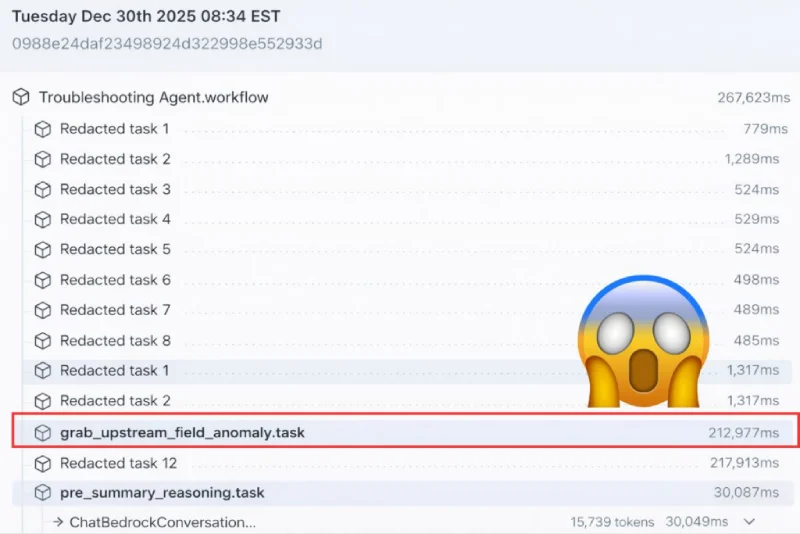
Token waste compounds most aggressively in agentic systems. An agent with no stopping conditions, unbounded tool calls, and a growing context window can spend 10x more than the same task done with tighter scaffolding.
You can mitigate this effect by defining explicit stopping conditions. Set max tool-call rounds and log token usage per agent run so runaway loops get caught early, not at billing time. Then validate with evals before scaling so that you can confirm the cheapest model that passes the necessary work threshold before paying for a premium one at volume.
5. Tag everything so you can measure it
You can’t optimize what you can’t measure. The API’s metadata field lets you attribute token usage by team, feature, or workflow. Every engineering team building on Claude at any meaningful scale should have this set up from day one, as surprises on the bill are almost always the result of an unmonitored workflow running in unexpected ways.
For practitioners: habits that change output quality
The developer optimizations above are about infrastructure. But the biggest token waste I see in most organizations happens with how people actually prompt and interact with Claude every day.
Here are some observations and pointers for practitioners looking to optimize their token usage in this regard:
Start a new conversation for every new task
This is the single highest-impact habit change, though few users do it consistently. People keep one Claude window open all day and treat it like a persistent assistant. The result of this is a context window that grows with every message, re-sending irrelevant history on every turn.
The same question in a fresh chat costs a fraction of what it costs as message #20 in a long thread. And the answer is better, because Claude isn’t diffusing attention across everything that came before it.
Be specific upfront; vagueness is expensive
Vague prompts trigger clarifying questions, and clarifying questions create extra exchanges. Ultimately, extra exchanges each re-send the entire conversation history. A single well-scoped prompt that gives Claude everything it needs, however, in terms of format, length, context, and output requirements, is almost always cheaper and faster than building up to it over multiple messages.
Compare:
| Wasteful | Efficient |
|---|---|
| “Can you help me understand what this code does?” | “Explain what this authentication function does in 2-3 sentences.” |
| “Write something about this topic for our blog” | “Write a 300-word blog intro with a headline and 3 body paragraphs about [specific topic] for a practitioner audience.” |
| “Tell me about this” | “Summarize the key findings from this report in 5 bullet points, focusing on the data governance implications.” |
Paste excerpts, not full documents
A 50-page document is 10,000-15,000 tokens to parse through, while the relevant section you need from that document might only need 1,500-2,000. That’s a 7-8x token difference, and Claude performs better on focused content. If you’re working with large documents regularly, consider pre-compressing them through a cheaper model first — strip filler, extract key facts and recommendations, and then send the condensed version to Claude for the actual analysis.
Watch for context degradation
Long sessions tend to degrade gradually rather than failing cleanly and obviously. The model stops following earlier instructions and you’ll see answers drift more and more toward the generic. Claude may even ask you to repeat something you already gave it. These are signals that the context window is filling up and early content is losing weight.
Most people will try to fix a degraded session by sending more messages. However, adding more context to a full context window makes the problem worse. The right move is to compact; distill the session’s key decisions and outputs into a summary, paste that into a fresh chat, and continue from there.
Why this matters at scale
Right now, most teams are running AI experiments. Token waste at experiment scale is annoying but manageable. At production scale, however, it’s a significant structural problem.
Organizations deploying AI effectively at production scale will benefit from a few key practices:
- Instrument everything from day one: usage by team, by workflow, and by feature to understand bottlenecks
- Build your agent architectures with explicit resource budgets, not open-ended loops
- Treat model selection as an engineering decision, not a default
- Validate quality at each tier before scaling spend to the next one
On the other hand, treating AI as a commodity input and ignoring the efficiency layer will almost guarantee you end up with runaway costs, degraded outputs, and systems that can’t be explained or debugged. Applying engineering discipline early on will compound the gains made over time.
Token efficiency is agent reliability; the two are not completely separate concepts. The same habits that keep your costs down also keep your outputs consistent, your context clean, and your systems predictable. And, as AI systems rapidly move toward fully autonomous agents running production workloads, this reliability practice becomes an essential foundation to future success.